Ann Varkey
a broken stone
heart
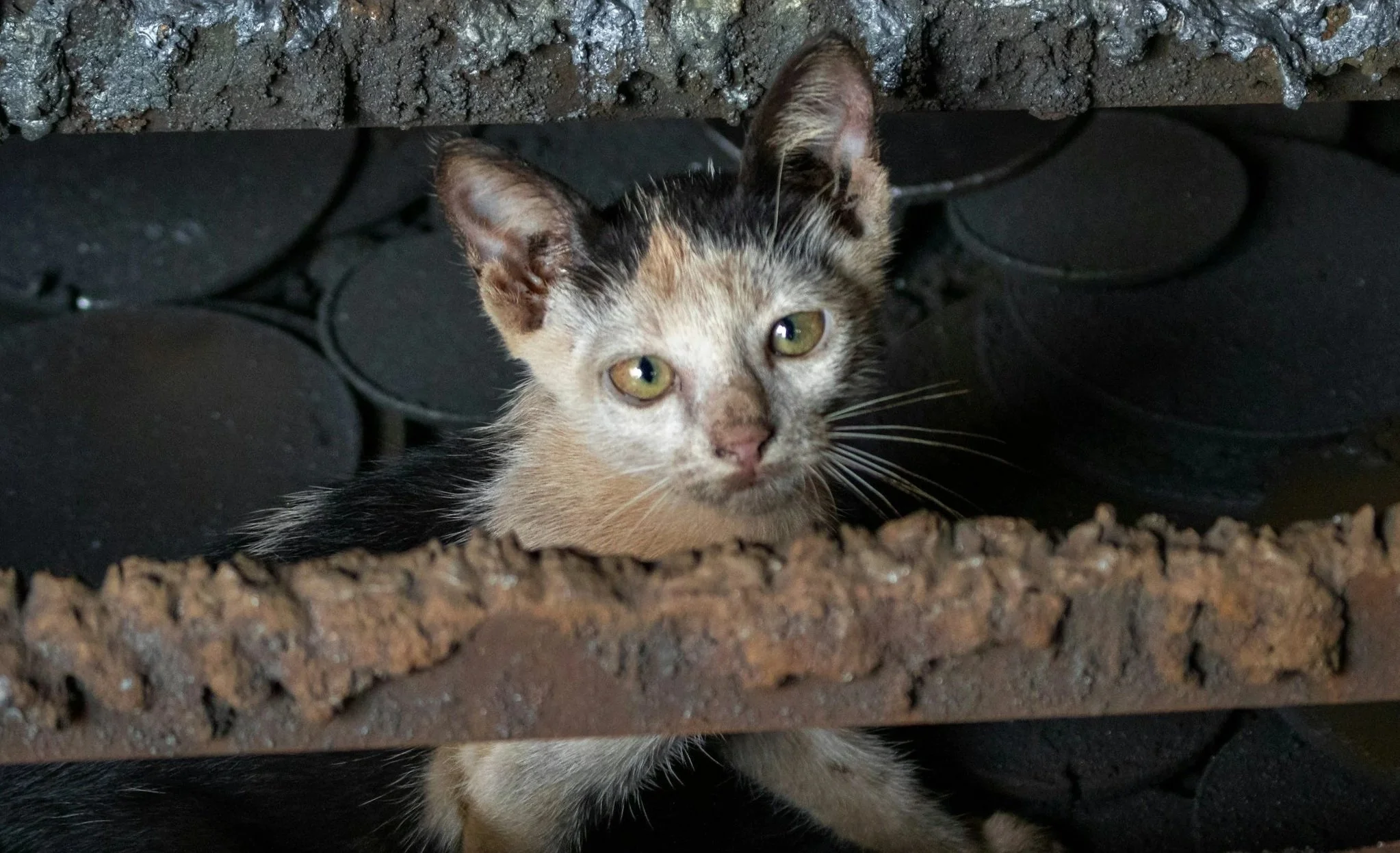
A small, sickly stray kitten warms itself on a heated funeral mat. The cloying smell of incense fills the air. The guests don’t touch it, but they sit next to it, sparing an occasional glance, between murmuring conversations. Its stripy soft brown fur sticks up, damp from the rain, and its eyes struggle to stay open, alert at the room full of busy strangers.
In another world, at any other time I would have taken the kitten to the back of the house, sneaking it between my arms when no one is looking. I would have fed the kitten and given it water. I would have hidden it in the kitchen when it rained and let it out when it was stronger, healthier, praying every day for its safety on the streets from the giant, swooping, carnivorous crows. I would have given it another chance at life. The aunties hate that their daughters keep going near the kitten. They insist on stroking it, trying to pick it up, fawning over it. They want to own it, to raise it, to play with it. I was once that child, too. What happened to that part of me? I wondered, privately. Was this the decisive evidence that I had become an adult? My calloused heart had hardened to all feelings, and I could only pity the small thing.
Now I saw it from the perspective of the adults. The cat was preoccupying the children, and they were making too much noise, too much fuss over it and disrupting the funeral of their grandfather. It was unruly behaviour. It was disrespectful behaviour. It made them look bad. The children were obsessing over a thing that had a good chance of dying, was already on its way to death. Was I really that naïve when I was young? A part of me hated that I had that thought. I could only watch as they screamed and cried when their mothers threatened to take the cat away if they did not stop touching it. They were afraid of an animal bite or scratch and the children catching rabies. Things were already bad, with the patriarch of the family dead, and they could not afford more distractions, more problems. Truthfully, it was only a matter of getting a vaccine for the humans, but the rise of rabies outbreaks in Kerala was life or death for the street cats and dogs. The ignorance of the small town, the fear of disease was as cold and as blunt as the blade of a knife. In a land where not even a fly (or a mosquito) could be trusted not to infect and kill, a cat or a dog was as good as dead meat. The only use the village had for pets was for dogs raised in a cage as young as possible and trained as an alarm for trespassing criminals.
I watched the scene unfold, as the girls screamed and thrashed, as one of my aunts picked up the cat by the scruff of its neck and tossed it over the brick wall at the side of the house, down onto the hard rocky path. An old woman walking by, with teeth missing and grey hair pulled up into a tight bun, made a face conveying a mixture of disdain and disgust, avoiding it as it arose weakly, clumsily and made its way slowly towards the strip of land covered in an overgrowth of bushes, owned by none of the surrounding neighbours. It spared a glance behind meekly, confused as to why and how it had been dumped back into the rain. And disappeared into the leafy undergrowth.
The funeral went on as planned, the rain growing louder on the tin roof. Sad Syrian-Christian funeral songs played on the radio near the glass casket. Relatives arrived, travelling far and wide, a family united by death. I welcomed them all solemnly, but with a polite, soft smile on my face. The eldest granddaughter they had all heard about, fresh from Britain. They all asked my how old I was. I told them I had just turned eighteen last month in June. Some uncles advised me that I should “study hard and ask my father to find a good man to marry. It was about time this family has some baby feet.” I told them that my life was just beginning, and that I am the baby feet. They burst into laughter at my words. I was glad to provide some humor. To be the clown at the death of a family’s patriarch.
As the evening drew to a close, all the visitors trickled out, and the family stayed behind, reunited in sorrow, all planning to sleep overnight, crowded in the same beds, at least thirty of them jammed into the five rooms upstairs in the Tharavad. I would have to give up my bed to an older couple, who I had no idea how exactly they were related to us, despite the number of times my dad tried to explain it to me. The faces at the funeral all blended into mush. It had been four years since I had visited India, and I had forgotten everything and everyone, it seemed. I had only been here three times in my entire life, for weeks at a time, anyway. I couldn’t make the effort to muster up the guilt despite knowing that I should be feeling it. That was one thing that I couldn’t blame on adulthood: my own growing apathy to things. It was something I had no control over, but it had seeped into every aspect of my life. Apathy over school, over my parents, over my appearance, and eventually my friends and now even other creatures. There was nothing I could do about it, I told myself. Apathy made me strong, tough. I didn’t care what anyone thought of me. I became stoic, practical, unmovable. Unafraid to be alone.
And yet seeing the kitten today had made me scrutinise that stony monolith I had built brick by brick, deep inside me. The lacerations on my heart- how many of them had been self-inflicted? To protect myself? Or so I believed. And yet, that kitten had done me no harm. But the fear of what my aunts would say if they saw me be a nuisance, the thought of becoming another burden to someone, made me stand still in my tracks. There was no reason I could not have helped that kitten. No reason except the fear of meddling in something I had no business in. Even at this funeral, I felt like an unfeeling alien, a clueless stranger to this world of tight knit families and grand expectations. It would have been better if I had not come here at all. But I thought about the innocence of those children. The kitten too, abandoned or separated from its mother. If I ever claimed to have loved animals, I had to help the kitten. And it seemed like I wasn’t even capable of doing that.
I went downstairs and made my way to the deckchair set out on the porch. The porch light turned on at my movement, a beacon in the night for wayward moths and mosquitoes. It was still raining quietly, a steady static sound, as if the weather were keeping me company while I sat there, resolved to brood. In the dark I saw a small shadow move across the front of the house, keeping close between the high cars parked from the funeral. My nerves instinctively went on edge. I squinted to see the shadow pause and walk closer to the house. It stopped just beneath underneath the tin roof of the house and curled into a ball. I got up before I realised it, moving closer towards it, trying to catch a glimpse of what the wet and the cold had dragged in.
Sure enough, it was the small kitten, eyes fluttering open and closed, wet and soggy. Half of its back was sticking out in the rain, but it did not seem to notice. Small wet paw prints marked the dusty, mosaic stone floor. I did not let myself think this time. I went back inside the house, grabbing a towel I found in the kitchen. It was used for grabbing hot things in a hurry. But the kitten was anything but warm as. I held it, cold and alert now, inside the towel. The kitten meowed and struggled in my grip as I dried it, to no avail as it was already quite weak. Today at least, I would let myself do what I wanted, damn the consequences. I warmed it with the towel, with my clothes and my hands. It grew calmer in my grasp, still meowing at me. I felt its small, beating heart beneath my thumb, fast. Its limbs felt fragile and breakable if I held them too tightly. Deep inside me, I felt the stone monolith shift. I felt it crack. I felt the lacerated heart inside me beat in response to its own, tiny drum heart. Perhaps one day the stone could be shaped into something beautiful- carved and chiselled into a beautiful monument instead of a high, impenetrable wall. I felt the hope in that thought, felt it bloom inside me. I held it as gently as I held the kitten, cradled to my chest, eyes now shut and sleeping softly.
***
Ann Varkey is a university student studying biology by day, and a writer by night. She loves exploring stories about childhood, loss of innocence, disillusionment with dreams, nature and social hierarchies. With her background in science, she brings a refreshing angle of realism to these themes, which ground nearly all of her work. When not writing or studying, she can be found swaddled in blankets at home reading with her dog.